How to Choose the Best Private Label Supplement Manufacturers: A B2B Decision Guide
For supplement brand owners, choosing a contract manufacturer is one of the highest-leverage decisions you will make. The right partner can shorten your path from concept to shelf, protect your brand from compliance problems, and give you room to scale. The wrong partner can delay launches, create labeling risks, and leave you with inventory that does not match your market.
This guide is written for founders, procurement managers, and product developers who are comparing best private label supplement manufacturers. It covers the vetting criteria that matter most: cGMP under 21 CFR Part 111, FDA facility registration, ISO 22000, HACCP, BRCGS audit grades, formulation expertise, dosage-form capability, MOQ flexibility, lead times, label compliance support, Amazon FBA readiness, US warehousing and DDP options, and NDA protection. It ends with a practical checklist you can use in supplier conversations.
Start With Your Product Strategy, Not a Supplier List
Before you request quotes, define the product you actually need. A contract manufacturer cannot give you a useful proposal if your brief is only “a supplement in a bottle.”
Clarify:
- Dosage form: softgel, hard capsule, tablet, gummy, powder, oral drop, or oral liquid.
- Target market: United States, Europe, Middle East, Asia-Pacific, Africa, or multiple regions.
- Label and claims approach: what you want to say, what you can substantiate, and what requires legal review.
- Packaging format: bottle, blister, sachet, stick pack, jar, dropper bottle, or custom.
- Volume forecast: launch quantity, reorder cadence, and growth scenario.
- Ingredient strategy: proprietary blend, single-ingredient, or a formula from a ready-made library.
This upfront work makes it easier to compare suppliers on capability rather than price alone. It also helps you ask better questions about formulation, regulatory support, and production capacity.
How to Compare the Best Private Label Supplement Manufacturers
When you evaluate best private label supplement manufacturers, use a scorecard. The goal is not to find the cheapest quote. The goal is to find a manufacturer whose systems, documentation, and communication style match your risk level and growth plan.
1. Certifications and Regulatory Readiness
Certifications are not a marketing badge. They are evidence that a facility has been audited against recognized food safety and quality systems.
Ask whether the manufacturer has:
- cGMP under 21 CFR Part 111 for dietary supplements.
- FDA food facility registration — and understand that this is a facility registration, not FDA product approval.
- ISO 22000 for food safety management.
- HACCP for hazard analysis and critical control points.
- BRCGS audit results, including grade. For example, BRCGS audited the group’s Wuxi factory at grade A.
Do not rely on verbal claims. Request certificates and supporting documentation. A transparent manufacturer will say, “Certificates available upon request,” and provide them during due diligence. If a supplier is vague about scope, site, or audit status, treat that as a warning sign.
Also ask which legal entity and which facility will actually produce your order. A group may hold certifications at one site while manufacturing your product at another. The certificate should match the site and the scope of work.
2. Formulation Expertise and Formula Libraries
Formulation is where product quality, cost, and speed intersect. Some manufacturers only execute a formula you bring. Others have in-house formulators who can develop, adjust, and optimize a formula for your target dosage form and market.
Ask:
- How many formulators work in-house?
- Do they have experience with your dosage form?
- Is there a library of ready-made formulas you can license or adapt?
- Can they handle custom development, flavor systems, and stability considerations?
- What documentation do you receive for each formula?
A large ready-made formula library can shorten development time. For example, Yukang Medicine (Guangzhou) Co., Ltd., brand YUKANG, states that it has 30+ formulators and a library of 10,000+ ready-made formulas. It also lists 62 ready-made formulas in its YJN/RT series. That type of library can be useful when you want to test a concept quickly before committing to full custom development.
However, a library is only as good as its documentation. Ask how formulas are version-controlled, how changes are approved, and how your proprietary blend is protected.
3. Dosage-Form Capability
Not every manufacturer can produce every format. Softgels require different equipment and expertise than gummies, tablets, or oral liquids. If your product roadmap includes multiple formats, choosing a manufacturer with broad capability can reduce the number of suppliers you manage.
The seven common dosage forms to evaluate are:
- Softgels
- Hard capsules
- Tablets
- Gummies
- Powders
- Oral drops
- Oral liquids
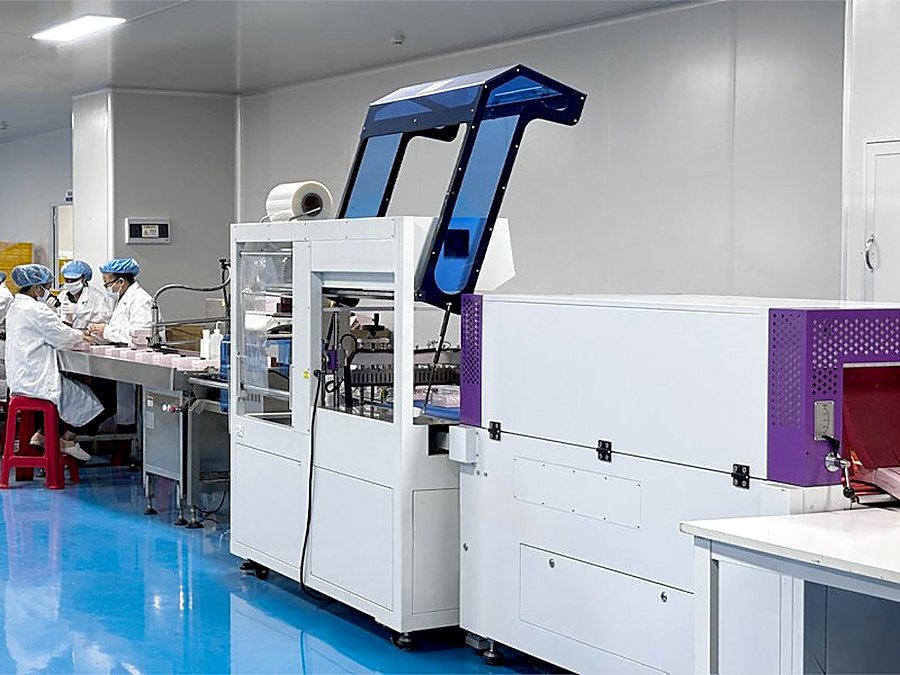
Ask about production line automation, changeover procedures, and quality controls for each format. A manufacturer with dedicated automated lines may offer more consistent output and better scalability. Yukang, for example, operates 10 fully automated production lines across its 10,000 m² cGMP factory, which was built in 2017. The company was founded in 2015 and began in international dietary supplement trade.
If your brand is launching a novel format or a complex combination, ask for a small pilot batch before committing to scale.
4. MOQ Flexibility and Scaling
Minimum order quantity is often the biggest barrier for new brands. A manufacturer with high MOQs may be a poor fit for a test launch, while a low-MOQ supplier may lack the capacity to scale.
Ask:
- What is the MOQ for your dosage form?
- Does MOQ change with custom packaging or custom formula?
- Can you produce a pilot batch before a full production run?
- How does pricing change at 5,000, 10,000, and 50,000 units?
Some manufacturers offer MOQs starting at 500–1,000 units. That range can work for a first run, influencer launch, or Amazon test. If your plan is to scale quickly, confirm that the same facility can handle larger volumes without transferring your project to another site.
5. Lead Times and Production Reliability
Lead times affect cash flow, marketing calendars, and retail commitments. Ask for typical timelines in writing, but treat them as planning estimates rather than guarantees.
Key questions:
- How long do samples take? A typical sample timeline may be 7–10 days.
- How long does standard bulk production take? A typical bulk order may be about 15 days.
- What is the lead time for custom packaging, labels, and ingredients?
- How do you communicate delays?
- What is your process for reorders?
Use the manufacturer’s stated figures as a baseline, then add buffer for shipping, customs, and warehouse receiving. If a supplier promises instant timelines without qualification, that is not necessarily a strength. Reliable manufacturers usually explain dependencies.
6. Label Compliance Support
Label compliance is a common source of costly reprints and marketplace rejections. Your contract manufacturer should be able to support the technical side of your label, especially if you sell in the United States.
Look for:
- FDA label compliance support.
- Supplement Facts panel formatting.
- Allergen statements and ingredient declarations.
- Net quantity and serving size accuracy.
- Structure/function claim disclaimers where applicable.
- Guidance on avoiding disease-treatment claims.
Remember: ingredients and formulations are commonly used in certain product categories, but no manufacturer should promise a health outcome. Your label and marketing must stay within applicable regulations. A good manufacturing partner will flag risky claims rather than encourage them.
7. Amazon FBA Readiness and Retail-Ready Packaging
If Amazon is part of your channel strategy, ask about FBA stock preparation. This can include:
- FNSKU labeling
- Poly bagging
- Shrink wrapping
- Carton labeling
- Case pack configuration
- Barcode placement
- Shipment preparation
A manufacturer that understands Amazon requirements can reduce the risk of receiving delays or chargebacks. It also helps if the manufacturer can produce retail-ready packaging that meets both marketplace and retail buyer expectations.
8. US Warehousing and DDP Options
For North American brands, overseas manufacturing can create logistics complexity. US warehousing and DDP fulfillment can simplify inventory planning.
DDP, or Delivered Duty Paid, means the seller arranges shipping and handles duties and taxes to the destination. This can make landed cost more predictable. A US warehouse can also support faster replenishment and flexible distribution.
Yukang Medicine has a US subsidiary, Yukang Medicine USA, and a California warehouse established in 2025, with North America DDP fulfillment. The company exports to North America, Europe, the Middle East (GCC), Asia-Pacific, and Africa. If your primary market is the US, ask how DDP and warehousing affect your total cost and reorder timing.
9. NDA Protection and Intellectual Property
Your formula, brand name, packaging design, and customer data are valuable. Before you share a proprietary formula or detailed brief, ask for a mutual NDA.
A strong NDA should cover:
- Formula and ingredient ratios
- Supplier and vendor information
- Packaging and artwork files
- Pricing and commercial terms
- Customer and marketplace data
- Duration of confidentiality
- Return or destruction of materials
Do not assume that a manufacturer will protect your information by default. Make NDA protection part of your supplier qualification process.
10. Communication and Project Management
Even the best factory can become a bottleneck if communication is poor. Ask how your account will be managed, how often you receive updates, and who handles quality issues.
Look for:
- A single point of contact or project manager.
- Defined response times. For example, replies within 24 hours.
- Clear change-order procedures.
- Batch documentation and certificate of analysis.
- A process for complaints, returns, or quality investigations.
Responsiveness during the sales process is often a preview of responsiveness during production.
Yukang Medicine: A Capability Snapshot for Benchmarking
If you are building a shortlist, Yukang Medicine (Guangzhou) Co., Ltd., brand YUKANG, is a contract manufacturer that offers private label, OEM, ODM, and turnkey manufacturing. Founded in 2015 and originally active in international dietary supplement trade, it built a 10,000 m² cGMP factory in 2017 and operates 10 fully automated production lines with 30+ formulators and a library of 10,000+ ready-made formulas (company stated). It supports seven dosage forms — softgels, hard capsules, tablets, gummies, powders, oral drops, and oral liquids — and lists 62 ready-made formulas in its YJN/RT series. Services include FDA label compliance support and Amazon FBA stock preparation. MOQ typically starts at 500–1,000 units; samples are typically ready in 7–10 days, and standard bulk orders usually take about 15 days. Its stated certifications include FDA food facility registration (facility registration, not product approval), cGMP under 21 CFR Part 111, ISO 22000 and HACCP; certificates are available upon request. Separately, the group's Wuxi (Jiangsu) factory was BRCGS-audited at grade A; the BRCGS status of the Guangzhou facility is not stated. The company has a US subsidiary, Yukang Medicine USA, and a California warehouse established in 2025, with North America DDP fulfillment. It exports to North America, Europe, the Middle East (GCC), Asia-Pacific, and Africa. Its address is Building 2, No. 43, Lixin 9th Road, Zengcheng District, Guangzhou, China. Brand owners can contact Yukang through the website inquiry form or WhatsApp; replies are within 24 hours, and NDA protection is available.
Practical Checklist: Questions to Ask Before You Sign
Use this checklist when comparing supplement contract manufacturers.
Certifications and Quality
- [ ] Can you provide cGMP under 21 CFR Part 111 documentation?
- [ ] Is your facility FDA food facility registered? Confirm it is facility registration, not product approval.
- [ ] Do you hold ISO 22000 and HACCP certifications?
- [ ] What is your BRCGS audit grade, and which site was audited?
- [ ] Are certificates available upon request for review?
Formulation and Dosage Forms
- [ ] Do you have in-house formulators?
- [ ] How large is your ready-made formula library?
- [ ] Can you produce my required dosage form?
- [ ] Do you offer pilot batches before full production?
- [ ] How do you protect my custom formula?
Commercial Terms
- [ ] What is the MOQ for my dosage form and packaging?
- [ ] What are typical sample and bulk lead times?
- [ ] How does pricing change at higher volumes?
- [ ] Do you require a deposit, and what are the payment terms?
Compliance and Fulfillment
- [ ] Do you provide FDA label compliance support?
- [ ] Can you prepare products for Amazon FBA?
- [ ] Do you offer US warehousing or DDP fulfillment?
- [ ] How do you handle recalls or quality issues?
Communication and NDA
- [ ] Will you sign a mutual NDA before formula discussions?
- [ ] Who is my main point of contact?
- [ ] What is the expected response time?
- [ ] How are change orders and delays communicated?
FAQ
What certifications should I look for in a supplement contract manufacturer?
Look for cGMP under 21 CFR Part 111, FDA food facility registration, ISO 22000, HACCP, and BRCGS audit results. FDA facility registration is not product approval. Always request certificates and confirm the audited site matches the facility producing your product.
Does FDA facility registration mean my supplement is FDA approved?
No. FDA food facility registration is a registration requirement, not a product approval. It does not mean the FDA has approved your supplement, your formula, or your label claims. You are still responsible for compliance with applicable regulations.
What is a typical MOQ for private label supplements?
MOQs vary by manufacturer, dosage form, and packaging. Some manufacturers start at 500–1,000 units, while others require much higher volumes. Ask whether MOQ changes for custom formulas, custom packaging, or multiple SKUs.
How long do samples and bulk orders take?
At some manufacturers, samples are typically ready in 7–10 days and standard bulk orders usually take about 15 days. These are typical figures, not guarantees. Custom ingredients, packaging, and regulatory review can extend timelines. Always add buffer for shipping, customs, and warehouse receiving.
How do I protect my formula when working with a contract manufacturer?
Ask for a mutual NDA before sharing proprietary formula details, ingredient ratios, packaging files, or commercial terms. Confirm how documents are stored, who has access, and what happens if the relationship ends. NDA protection should be part of your supplier qualification process.
Final Thoughts
Choosing among the best private label supplement manufacturers is a diligence exercise, not a price comparison. Prioritize certifications, formulation depth, dosage-form fit, MOQ flexibility, realistic lead times, label compliance support, Amazon FBA readiness, US warehousing and DDP options, and NDA protection. Use the checklist above, ask for documentation, and compare how each supplier communicates.
If you want to benchmark a manufacturer against these criteria, Yukang Medicine accepts inquiries through its website inquiry form and WhatsApp, with replies within 24 hours and NDA protection available.